
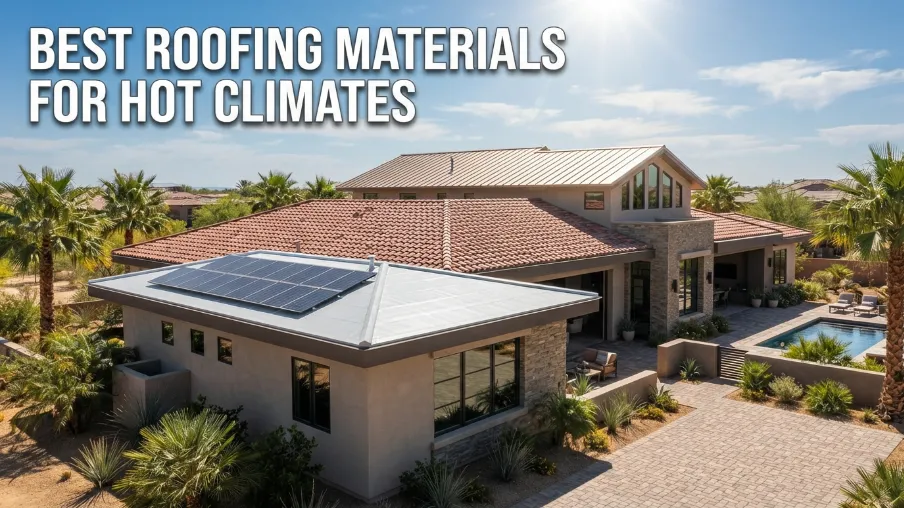
If you live somewhere with brutal summers, you already know how much your roof affects the temperature inside your house. A poorly chosen roof can turn your attic into an oven, push your air conditioning bill through the roof, quite literally, and even shorten the life of your roofing material itself due to constant heat exposure.
Picking the right roofing material for a hot climate isn’t just about looks. It’s about how well that material reflects heat, how it handles UV exposure year after year, and how long it holds up without warping, cracking, or fading. This guide breaks down the best options, in plain language, so you can make a decision that actually keeps your house cooler and your wallet happier.
Let’s get into it.
Why Roofing Material Choice Matters So Much in Hot Climates
Your roof takes the brunt of direct sunlight all day, every day. Some materials absorb that heat and transfer it straight into your attic and living space below, forcing your cooling system to work overtime. Others reflect a large portion of that heat away, keeping your home noticeably cooler without any extra effort from your air conditioner.
Beyond comfort, the right material also holds up better over time. Intense sun and heat can cause certain roofing materials to crack, fade, or degrade faster than they would in milder climates. Choosing wisely from the start saves you money on both cooling costs and future repairs.
Metal Roofing
Metal roofing has become one of the most popular choices for hot climates, and for good reason. It reflects a significant amount of solar radiation instead of absorbing it, which keeps attic temperatures noticeably lower compared to darker, heat absorbing materials.
Many metal roofs also come with reflective coatings designed specifically for heat reduction, sometimes referred to as cool roof coatings. On top of the heat benefits, metal roofing tends to last a very long time, often 40 to 70 years depending on the type, and it holds up well against intense UV exposure without breaking down the way some other materials do.
The main downside people mention is the upfront cost, which is higher than some traditional options. However, the long lifespan and energy savings often balance that out over time.
Clay and Concrete Tiles
Clay and concrete tiles are a classic choice in hot climates, especially in Mediterranean and desert regions where you’ll see them everywhere. Their natural shape creates air pockets between the tiles and the roof deck, which allows heat to escape rather than getting trapped and pushed into the house below.
These tiles also handle direct sun exposure extremely well without degrading quickly, and they’re naturally resistant to fire, which is a bonus in dry, hot regions prone to wildfires.
The weight of clay and concrete tiles is something to keep in mind, since your roof structure needs to be able to support it. This usually means additional structural planning if you’re retrofitting an older house rather than building new.
Cool Roof Shingles
Traditional asphalt shingles have a reputation for absorbing a lot of heat, which isn’t ideal for hot climates. But newer cool roof shingle options have been developed specifically to address this problem. These shingles use reflective granules that bounce back more sunlight compared to standard dark colored shingles.
They’re a good middle ground option if you like the traditional shingle look but want better heat performance than standard asphalt shingles offer. They’re also generally more affordable than metal or tile roofing, which makes them appealing if budget is a major factor.
Keep in mind that even cool roof shingles don’t perform quite as well as metal or tile options when it comes to heat reflection, so it’s a bit of a compromise between cost, appearance, and performance.
Slate Roofing
Slate is a natural stone material known for its durability and classic appearance. It handles heat reasonably well and holds up under intense sun exposure for decades without breaking down, often lasting well over 75 years with proper installation.
Slate is heavy, similar to clay and concrete tiles, so structural support is something to plan for ahead of time. It’s also on the pricier side compared to most other roofing materials, which puts it out of reach for some budgets, but the sheer lifespan and low maintenance needs make it a solid long term investment for those who can afford it.
Synthetic and Composite Roofing
Synthetic roofing materials, designed to mimic the look of slate, wood shakes, or tile, have become increasingly popular for hot climates. These products are engineered specifically to resist UV damage, fading, and cracking, all common problems that come with intense sun exposure over the years.
They’re typically lighter than natural slate or tile, which means less structural reinforcement is needed, and they often come at a lower price point while still offering strong heat resistance and a long lifespan.
If you like the appearance of premium materials like slate or wood but want something more budget friendly and lightweight, synthetic roofing is worth looking into.
Green Roofs
Green roofs, covered in vegetation and a growing medium, are less common but genuinely effective at managing heat in hot climates. The layer of plants and soil acts as natural insulation, absorbing and dissipating heat rather than letting it transfer directly into your house.
Beyond the cooling benefits, green roofs also help with stormwater management and can improve air quality around your property. The tradeoff is that they require more upfront investment, ongoing maintenance, and structural support to handle the added weight, so they’re not the easiest option for every homeowner, but they’re worth considering for those interested in a more sustainable approach.
What to Look for Regardless of Material
No matter which material you’re leaning toward, a few factors matter across the board when you’re building or roofing in a hot climate.
Look for materials with a high solar reflectance rating, sometimes labeled as SRI, since this number tells you how well the material reflects sunlight instead of absorbing it. Lighter colors generally reflect more heat than darker ones, so color choice matters almost as much as material choice. Proper attic ventilation also plays a huge role in keeping your home cool, even with a great roofing material, since trapped hot air in your attic can still radiate heat downward into your living space.
Final Thoughts
Choosing the right roofing material for a hot climate comes down to balancing upfront cost, long term durability, and how well the material actually reflects heat rather than absorbing it. Metal roofing and cool roof shingles offer strong performance at different price points, while clay, concrete, and slate bring classic style along with excellent heat resistance, provided your structure can support the weight.
Whatever you choose, pairing it with proper attic ventilation and a lighter color finish will boost its performance even further, keeping your home noticeably cooler and your energy bills lower for years to come.
Frequently Asked Questions
What is the most heat resistant roofing material? Metal roofing with reflective coatings and light colored tile options tend to perform the best when it comes to reflecting heat rather than absorbing it.
Do dark colored roofs get hotter than light colored ones? Yes. Dark colors absorb more sunlight and heat, while lighter colors reflect a larger portion of it away from the roof surface.
Is metal roofing actually good for hot climates? Yes. Metal roofing reflects solar radiation effectively, often comes with cool roof coatings, and holds up well against long term UV exposure without breaking down.
How much can the right roofing material lower my cooling costs? It varies based on climate and house design, but homeowners often report noticeable reductions in cooling costs after switching to reflective or heat resistant roofing materials, sometimes saving a meaningful percentage on their energy bills each month.