
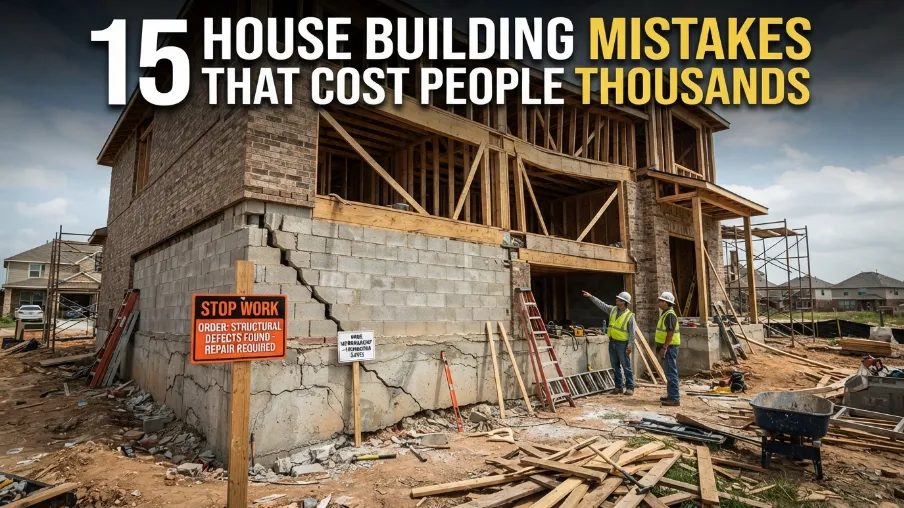
Building a house sounds exciting until reality hits. You save up for years, pick out a plot, hire a contractor, and think everything will go smoothly. Then halfway through construction, something goes wrong. Money runs out faster than expected. The layout feels wrong. The walls develop cracks within a year.
The truth is, most people who build a house make at least one of the mistakes on this list. Some of these mistakes are small and fixable. Others are permanent and painful to live with for decades. This post walks you through every major mistake people make when building a house, in simple language, so you can avoid the same traps.
Let’s get into it.
1. Not Setting a Realistic Budget
This is the number one reason people regret building their own house. They start with a number in mind, say 30 lakhs or 50 lakhs, and by the time the house is complete, they’ve spent 20 to 30 percent more than planned.
Construction costs rarely stay the same from start to finish. Material prices go up, labor charges increase, and unexpected issues pop up along the way. A smart move is to add at least 15 to 20 percent extra on top of your planned budget as a buffer. This way, you won’t be forced to compromise on quality or stop work halfway.
2. Skipping Soil Testing
A lot of people skip soil testing because it feels like an unnecessary expense. This is one of the costliest mistakes you can make. The soil under your plot decides how strong your foundation needs to be.
If the soil is soft or has poor bearing capacity and you don’t know this beforehand, your foundation might be built wrong. This can lead to cracks in walls, uneven flooring, or in extreme cases, structural damage years later. Soil testing costs very little compared to the price you’ll pay for foundation repairs later.
3. Choosing the Wrong Contractor or Builder
People often pick a contractor based on price alone, or because a relative recommended them. This decision affects everything about your house, from the quality of materials used to how long the project takes.
Before hiring anyone, ask to see their past projects. Talk to previous clients if possible. Check if they’re known for finishing projects on time. A cheaper contractor who cuts corners on cement quality or steel thickness can end up costing you far more in repairs down the line.
4. Ignoring the Importance of a Proper Plan
Many homeowners jump straight into construction without a detailed architectural plan. They think they can figure out the rooms and layout as they go. This almost always backfires.
A proper plan considers things like natural light, ventilation, room sizes, plumbing lines, electrical wiring, and future needs like extra rooms. Without this planning, you might end up with a bathroom that has no window, a kitchen that’s too small, or bedrooms that don’t get any sunlight.
5. Not Thinking About Ventilation and Natural Light
Ventilation and light are often the last thing people think about, but they matter every single day you live in that house. A dark, poorly ventilated home feels uncomfortable and can even lead to dampness and mold problems over time.
When you’re finalizing the layout, pay attention to window placement, cross ventilation between rooms, and how sunlight moves through the house during different times of day.
6. Using Low Quality Materials to Save Money
It’s tempting to cut costs on materials like cement, sand, steel, and bricks because they seem like small expenses compared to labor and finishing. But these materials form the actual skeleton of your house.
Weak or substandard materials can cause your walls to crack, your roof to leak, or your foundation to weaken much faster than it should. Spend your savings on finishing touches like paint, tiles, or furniture instead of the structural materials. Never compromise there.
7. Not Planning for Plumbing and Electrical Work in Advance
Plumbing and electrical work are usually done during construction, but a lot of people don’t plan them properly at the start. This leads to pipes running through awkward places, switches in inconvenient spots, or not enough electrical points for modern appliances.
Sit down early with your electrician and plumber, and map out exactly where you want switches, sockets, water outlets, and drainage points. Redoing this work after the house is built means breaking walls and floors, which is expensive and messy.
8. Forgetting About Drainage and Water Flow
Water flow around your house is easy to overlook but causes serious problems if ignored. If the ground around your house isn’t sloped properly, rainwater can collect near the foundation and slowly damage it over the years.
Make sure your builder accounts for proper drainage, gutters, and slopes so water flows away from your house rather than toward it.
9. Not Hiring a Structural Engineer
Some people rely only on a contractor without ever consulting a structural engineer. A structural engineer’s job is to calculate exactly how strong your foundation, columns, and beams need to be based on the size and weight of your house and the soil condition.
Skipping this step to save money is risky. A house without proper structural calculations may look fine on the surface but be dangerously weak underneath.
10. Overspending on Fancy Design Elements Early On
It’s easy to get excited during the planning phase and add expensive design features like false ceilings, imported tiles, or fancy lighting fixtures. The problem is that people often run out of money for basic necessities because they spent too much on aesthetics early.
Prioritize the essentials first, a strong foundation, good plumbing, solid electrical work, and quality flooring. You can always add decorative elements later once the core house is complete and stable.
11. Not Getting Proper Permits and Approvals
Building without proper municipal approval or permits might seem like a shortcut to save time and paperwork hassle, but it can turn into a nightmare later. Authorities can fine you, ask you to demolish parts of the structure, or refuse to connect utilities like water and electricity.
Always check with your local municipal office about what permits and approvals you need before construction begins.
12. Not Considering Future Needs
A lot of homeowners build only for their current situation. A young couple might build a small two bedroom house without thinking about a growing family. Someone might not think about aging parents who may need a ground floor room later.
Think a few years ahead. Even if you can’t build everything right now, plan the structure in a way that allows for future additions like an extra floor or room without major structural changes.
13. Poor Communication With the Construction Team
Miscommunication between the homeowner and the construction team leads to a surprising number of problems. A wall built in the wrong place, a window installed at the wrong height, or tiles chosen without the owner’s final approval, these things happen because of gaps in communication.
Visit the site regularly, keep a record of decisions in writing, and don’t assume the team knows what you want unless you’ve clearly told them.
14. Not Budgeting for Interior and Finishing Costs
People often calculate the cost of construction but forget to set aside a separate budget for interiors, furniture, and finishing work. Painting, flooring, kitchen fittings, wardrobes, and lighting fixtures can add up to a large amount, sometimes 20 to 25 percent of your total budget.
Plan for these costs separately from the beginning so you’re not caught off guard once the main structure is ready.
15. Rushing the Construction Timeline
Trying to finish construction too quickly, either to save on labor costs or to move in sooner, often results in poor quality work. Concrete needs proper curing time, walls need time to dry before plastering, and rushing these natural processes weakens the final structure.
A good house takes time to build properly. Give your construction team realistic timelines instead of pushing for unnecessary speed.
Final Thoughts
Building a house is one of the biggest financial and emotional investments most people make in their lifetime. It’s not just about walls and a roof, it’s about creating a space where you’ll spend years of your life. Taking time to plan properly, choosing the right people to work with, and avoiding these common mistakes can save you from years of regret and repair costs.
If you’re currently in the planning stage, use this list as a checklist. Go through each point with your architect, contractor, and engineer before construction begins. A little extra care now can save you a huge amount of stress and money later.
Frequently Asked Questions
1. What is the biggest mistake people make when building a house?
Not setting aside a proper budget with a buffer for unexpected costs is one of the most common and costly mistakes.
2. Is soil testing really necessary for a small house?
Yes. Regardless of house size, soil testing helps determine the right foundation design, which protects the entire structure long term.
3. Can I skip a structural engineer if I already have a contractor?
It’s not recommended. A contractor focuses on execution, while a structural engineer focuses on safety calculations. Both roles are different and important.
4. How much extra budget should I keep aside?
A buffer of 15 to 20 percent above your estimated cost is a safe amount for most construction projects.